Welcome to the Spring 2026 edition of the BOOSTER newsletter! This issue highlights a particularly active period for the project, with new scientific progress, stronger outreach activities and fresh communication materials showing how BOOSTER is moving from research advances towards broader visibility and stakeholder engagement. In this edition, you can read about the latest work of BOOSTER partners on drought-resilient crops, including CREA’s advances in regulatory-DNA mapping, the University of Bern’s progress on microbial and seaweed-based solutions for teff, and CPSBB’s work on maize priming strategies. We also present the launch of the joint “Resilience Innovations” webinar series with HelEx, BOOSTER’s participation in the Apple Finch Pudding • Plants podcast, and the project’s latest video, which brings our scientific approach closer to wider audiences. The newsletter also features recent scientific publications that strengthen BOOSTER’s contribution to plant genomics, crop improvement and climate-resilient agriculture, as well as upcoming activities planned for the next months, including the third annual meeting, the second “Resilience Innovations” webinar and the BOOSTER educational game. We invite you to explore this edition and follow BOOSTER’s progress as the project continues to connect science, innovation and sustainable farming across Europe and Africa.
Content:
- NEWS
- WEBINAR
- PODCAST
- VIDEO
- SCIENTIFIC PUBLICATIONS
- UPCOMING
| |
|
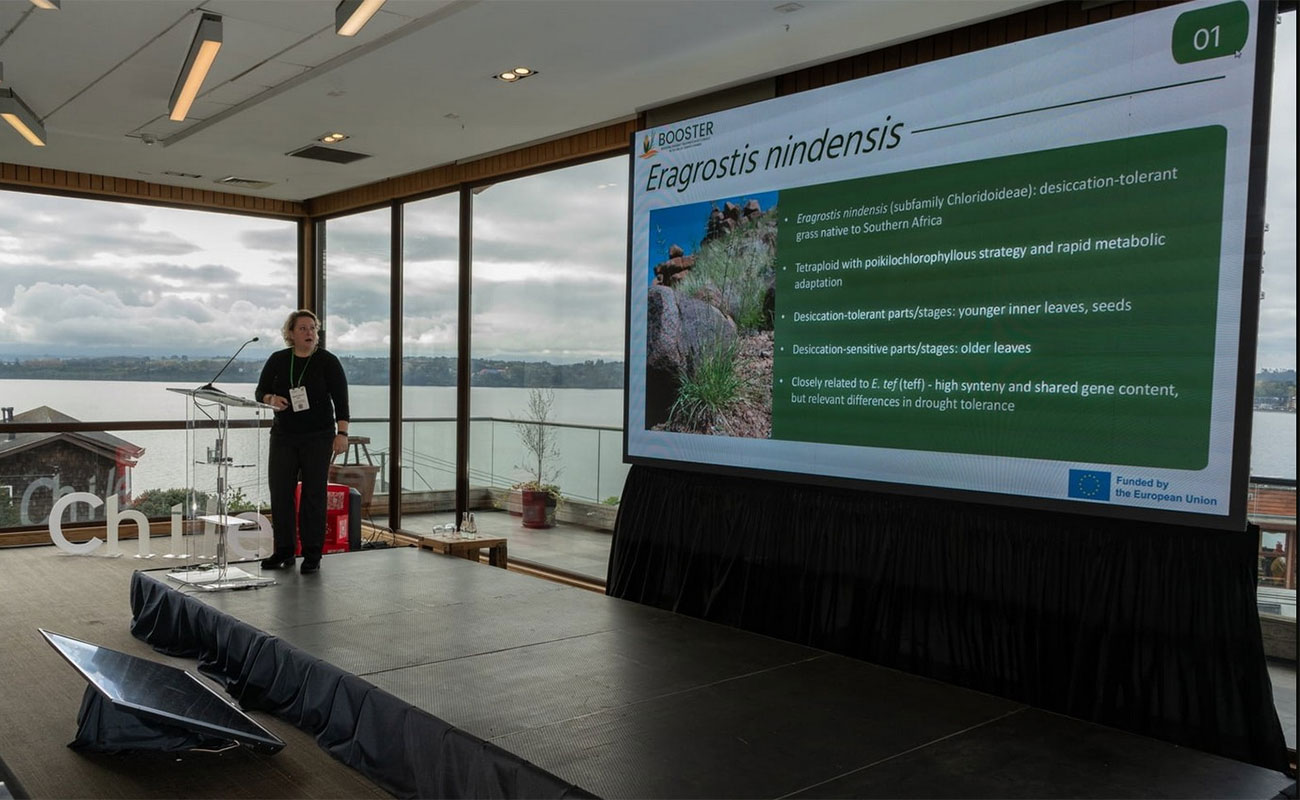
CREA drives BOOSTER’s drought resilience through genomics and global engagement | From pioneering regulatory-DNA mapping in teff and Eragrostis nindensis to presenting BOOSTER innovations at international conferences and training on climate-smart water solutions, CREA continues to drive scientific and societal impact across the project. | CREA’s multi-team contributions accelerate BOOSTER’s scientific and stakeholder impact. The CREA teams across CI Bergamo and GB Fiorenzuola D’Arda have delivered major advances in BOOSTER’s mission to uncover the genetic and molecular mechanisms behind drought tolerance in cereal crops. [...] | | |
|
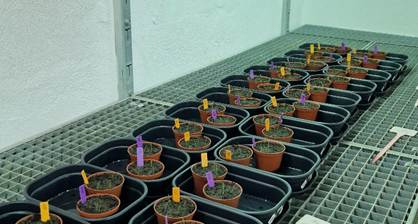
University of Bern advances microbial and seaweed-based solutions for drought-resilient teff | The University of Bern (UBERN) plays a key scientific role in the BOOSTER project, leading the discovery and selection of microbial and seaweed extract (SWE) solutions to enhance drought tolerance in teff, a staple crop in drought-prone regions. | As part of its contribution to BOOSTER, UBERN is driving key activities to identify biological solutions that can strengthen teff’s resilience to drought. Central to this work was the screening of a diverse collection of 58 microbial isolates sourced from drought-prone soils in South Africa (21 isolates) and Ethiopia (37 isolates). These candidates were evaluated through a structured greenhouse screening pipeline using teff as the model crop, with the goal of pinpointing microbes capable of improving plant performance under water-limited conditions. [...] | | |
|
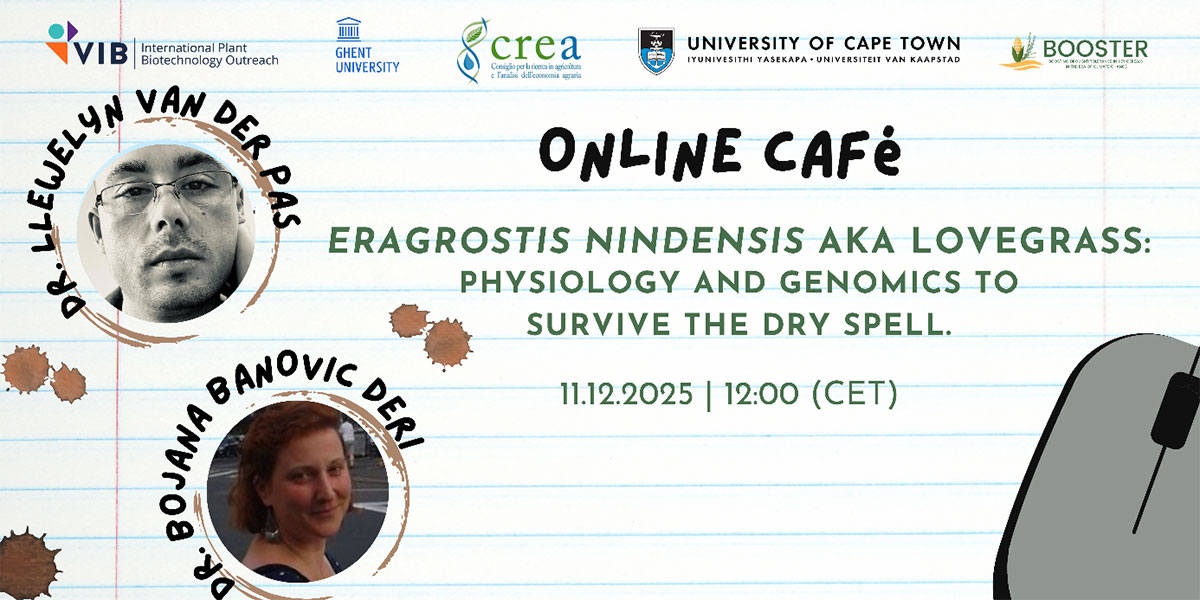
BOOSTER scientists spotlight drought-resilient “resurrection plant” in VIB-IPBO Online Café | On 11 December, VIB-IPBO hosted a new edition of its Online Café series, bringing together two BOOSTER scientists to share cutting-edge insights into drought resilience research. | These webinars are designed to highlight how similar scientific challenges are approached across continents, making BOOSTER—with its strong Europe–Africa collaboration—a natural fit for the format. The session focused on Eragrostis nindensis, commonly known as lovegrass, a remarkable species native to southern Africa. This plant is widely recognised for its extreme drought tolerance and ability to survive near-total desiccation, effectively “resurrecting” when water becomes available again. [...] | | |
|
CPSBB brings BOOSTER’s maize drought-resilience work into focus through priming research and early results | From preliminary findings on seaweed-extract priming strategies to public presentations linking BOOSTER with food security and sustainable agriculture, CPSBB gives clearer shape to the project. | At the Centre of Plant Systems Biology and Biotechnology, CPSBB, in Plovdiv, Bulgaria, BOOSTER is taking shape as more than a research project. It is becoming a focused scientific effort to understand how maize and other cereal crops can be better prepared for drought through plant stress biology, biostimulants, and priming strategies. [...] | | |
|
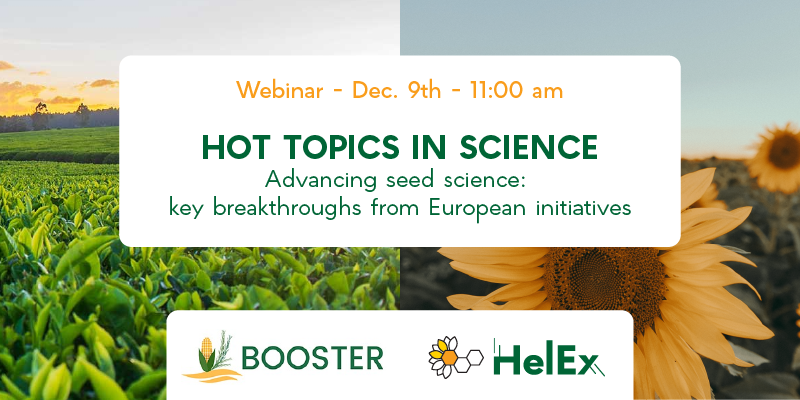
BOOSTER & HelEx launch “Resilience Innovations” webinar series | BOOSTER and HelEx have joined forces to launch “Resilience Innovations”, a joint webinar series designed to connect research, practice and policy around climate-smart agriculture and crop resilience. As part of a coordinated dissemination effort, the initiative brings together experts from both projects to share knowledge, present scientific and practical advances, and engage with key stakeholder groups. | The series is structured as a multi-session initiative held twice a year, with each session tailored to a specific audience, from scientists and students to farmers, industry professionals and policy makers, ensuring targeted dialogue across the agricultural innovation ecosystem. | | | The first webinar, “Hot Topics in Science”, took place on 11 December 2025 and focused on the academic community, including researchers, PhD candidates and postdoctoral scholars. The session showcased cutting-edge research contributing to crop resilience and climate-smart agriculture, highlighting the importance of collaboration between Horizon Europe projects in addressing climate challenges in agriculture. | | |
|
BOOSTER at Apple Finch Pudding • Plants podcast | BOOSTER has further strengthened its outreach through its participation in Apple Finch Pudding • Plants, a science communication podcast and YouTube series dedicated to making cutting-edge research accessible and engaging for wider audiences. | Part of the broader Apple Finch Pudding initiative, a monthly science podcast featuring expert interviews across disciplines and designed to help listeners “understand what is being researched and how things work”, the platform brings complex scientific topics closer to both specialised and non-specialised audiences. The Plants series focuses specifically on plant biology, crop science and agricultural innovation, offering in-depth conversations with leading researchers on how scientific advances are shaping more resilient and sustainable food systems. Within this collaboration, UDUS represented the BOOSTER project in an episode exploring how genomics and innovation contribute to plant resilience and climate-smart agriculture. The discussion covered key topics such as drought tolerance, the genetic basis of crop resilience, and the role of emerging technologies such as CRISPR in balancing productivity and stress resistance. Featured as a BOOSTER outreach highlight, the episode has already reached approximately 3,200 views within two months, demonstrating strong engagement and interest from both the scientific community and a broader audience. | | |
|
From science to fields: BOOSTER unveils its latest video on crop resilience | BOOSTER released of a new project video showcasing its mission and impact. Bringing together leading research institutes, universities and biotech companies across Europe and Africa, BOOSTER is developing innovative solutions to support drought-resilient farming and strengthen future food systems. | The video highlights the project’s unique collaborative approach, featuring partners from across continents working at the intersection of advanced research and real-world application, from laboratory innovation to field trials. By combining expertise in genomics, biotechnology and crop science, BOOSTER is translating cutting-edge knowledge into practical solutions that support farmers and improve crop resilience under climate stress. This new visual asset offers a compelling overview of how BOOSTER is addressing one of agriculture’s most pressing challenges, while reinforcing the project’s commitment to delivering tangible impact across diverse agricultural systems. | | |
|
| | And subscribe to our YouTube channel to stay up to date with the latest videos and project insights. |
|
BOOSTER partners continue to generate high-impact scientific knowledge, with several new publications further strengthening the project’s contribution to climate-resilient agriculture. | Recent outputs highlight advances in plant genomics, crop improvement and drought resilience, including research on tef, an underutilised African cereal with strong potential for climate adaptation, and new insights into genetic regulation of key traits in maize. Additional studies explore desiccation tolerance in resilient plant species and the role of neglected crops in supporting more diverse and sustainable agricultural systems. | |
|
MOAflow: how re-design a pipeline with Nextflow streamlines data analysis | Authors: Jacopo Tartaglia, Mario Giorgioni, Luigi Cattivelli and Primetta Faccioli. | Advances in high-throughput DNA sequencing technologies have dramatically reduced the time and cost required to generate genomic data. As sequencing is no longer a limiting factor, increasing attention must be paid to optimizing the analyses of the large-scale datasets produced. Efficient processing of such data is essential to reduce computational time and operational costs. In this context, workflow management systems (WMSs) have become key instruments for orchestrating complex bioinformatic pipelines. Among these systems, Nextflow has emerged as one of the most widely adopted solutions in bioinformatics. [...] |
|
Population genomics uncovers loci for trait improvement in the indigenous African cereal tef (Eragrostis tef) | Authors: Maximillian R. W. Jones, Worku Kebede, Abel Teshome, Aiswarya Girija, Adanech Teshome, Dejene Girma, James K. M. Brown, Jesus Quiroz-Chavez, Chris S. Jones, Brande B. H. Wulff, Kebebew Assefa, Zerihun Tadele, Luis A. J. Mur, Solomon Chanyalew, Cristobal Uauy & Oluwaseyi Shorinola. | Tef (Eragrostis tef) is an indigenous African cereal that is gaining global attention as a gluten-free “superfood” with high protein, mineral, and fibre contents. However, tef yields are limited by lodging and by losses during harvest owing to its small grain size (150× lighter than wheat). [...] |
|
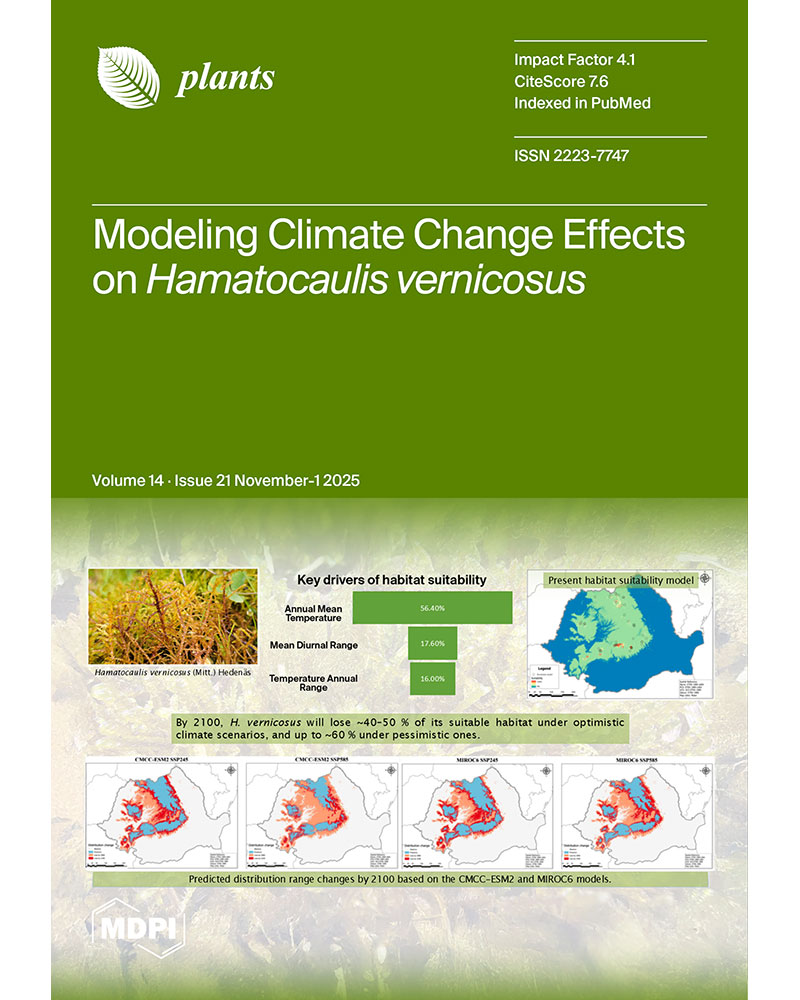
Defying Death: A Multi-Omics Approach to Understanding Desiccation Tolerance and Senescence in Eragrostis nindensis | Authors: Christine F. Madden, Brett Williams, Sagadevan Mundree, Sébastien Acket, Eric Ruelland, Henk W. M. Hilhorst and Jill M. Farrant. | Eragrostis nindensis is a resurrection grass capable of surviving near-complete desiccation. We compared non-senescent leaf tissue (NST) and senescent leaf tissue (ST) to investigate the cellular and molecular basis of desiccation tolerance and senescence. NST recovered fully after drying, while ST failed to regain viability. Integrated transcriptomic (using RNA-Seq), lipidomic (using LC-MS), and ultrastructural (Transmission Electron Microscopical) analyses revealed that NST maintain RNA processing, protein folding, and translational activity during desiccation. [...] |
|
Neglected and underutilized crops of Africa: Diversity and distribution
| Authors: Zerihun Tadele, Lea Jäggi, Lorena Ramirez-Gonzales and Simeo Sumuni. | Neglected and underutilized crops (NUC) refer to domesticated plant species that have been used for long time for their food, feed, fiber, oil, or medicinal properties, but have been reduced in importance over time. These crops are also known as orphan, abandoned, lost, underused, local, minor, traditional, alternative crops. Due to multiple dietary benefits and their resilience to extreme environmental conditions, NUC are considered as crops of the future. In general, NUC plays key role in the food and nutrition security of small-scale farmers and consumers in the developing world. [...] |
|
Neglected and underutilized crops of Africa: Challenges and opportunities | Authors: Lorena Ramirez-Gonzales, Simeo Sumuni, Lea Jäggi and Zerihun Tadele. | Neglected and underutilized crops (NUCs) refer to domesticated plant species that have been used for a long time for their role in food, feed, fiber, oil or medicine, but have lost importance over time. These crops are also known as orphan, abandoned, lost, underused, local, minor, traditional, and alternative crops. Due to multiple dietary benefits and their resilience to extreme environmental conditions, NUCs are considered Crops of the Future. In general, NUCs play a key role in the food and nutrition security of smallholder farmers and consumers in Africa. [...] |
|
The BOOSTER consortium’s annual meeting to review progress, align upcoming research activities, and plan dissemination actions. |
|
Target audience farmers and crop producers: June 2026 |
|
A video game to teach students and young farmers about plant resilience and sustainable farming through gamified challenges. |
|
With all the news, publications, videos and more, related to the BOOSTER project, that will appear during the coming months. |
|
PREVIOUS NEWSLETTER EDITIONS |
|
|